 SURIQ
SURIQ01
Snapshots across your clouds
One console for DigitalOcean, Hetzner, Vultr, Linode, OVHcloud, Kamatera, Contabo, UpCloud, Xen Orchestra, and more. Connect an account, assign your servers, done.
CloudSnap takes and rotates snapshots across your cloud providers from one console. Set a schedule once, cover whole fleets by rule, and let it run - through a controlled layer that physically cannot delete your servers.
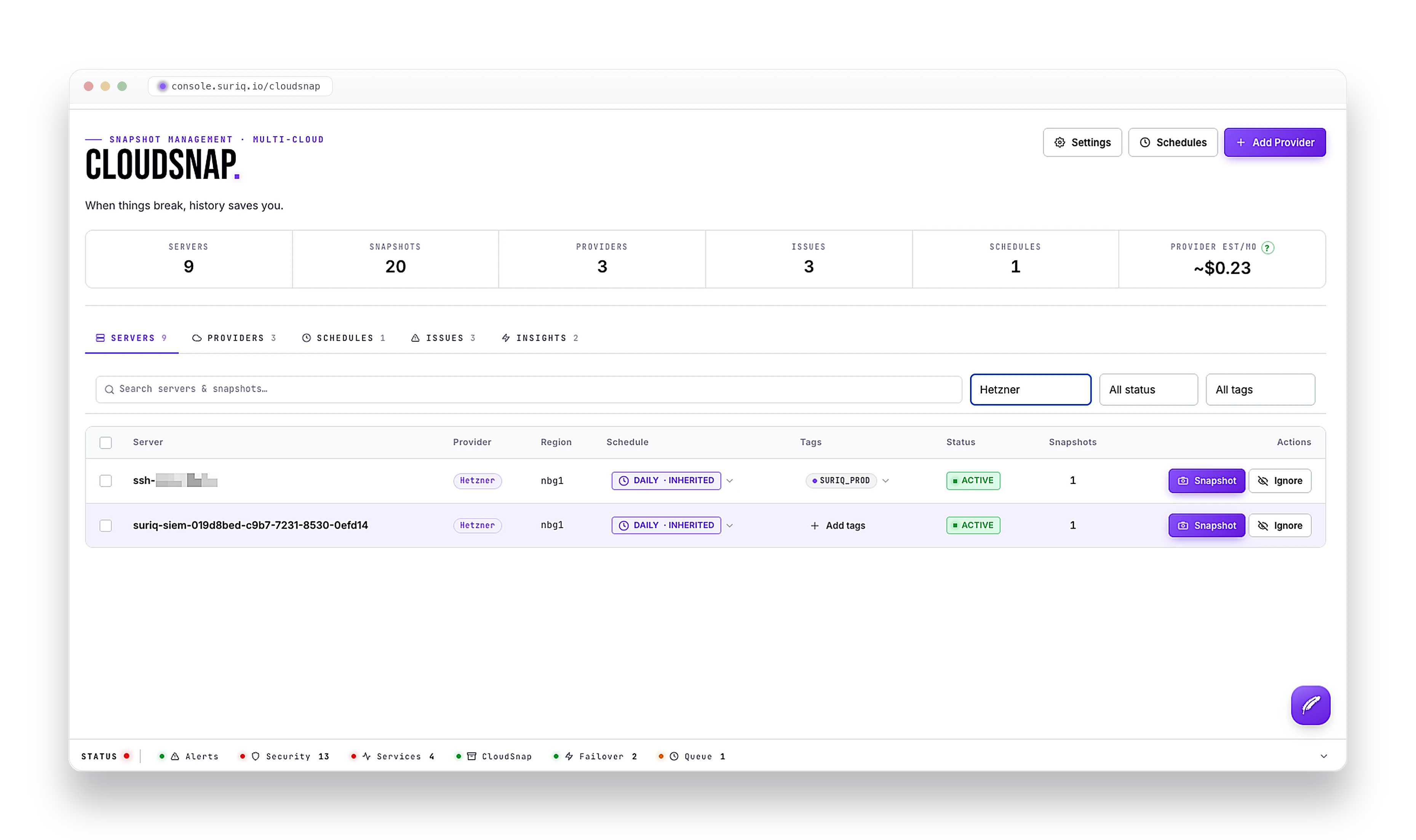
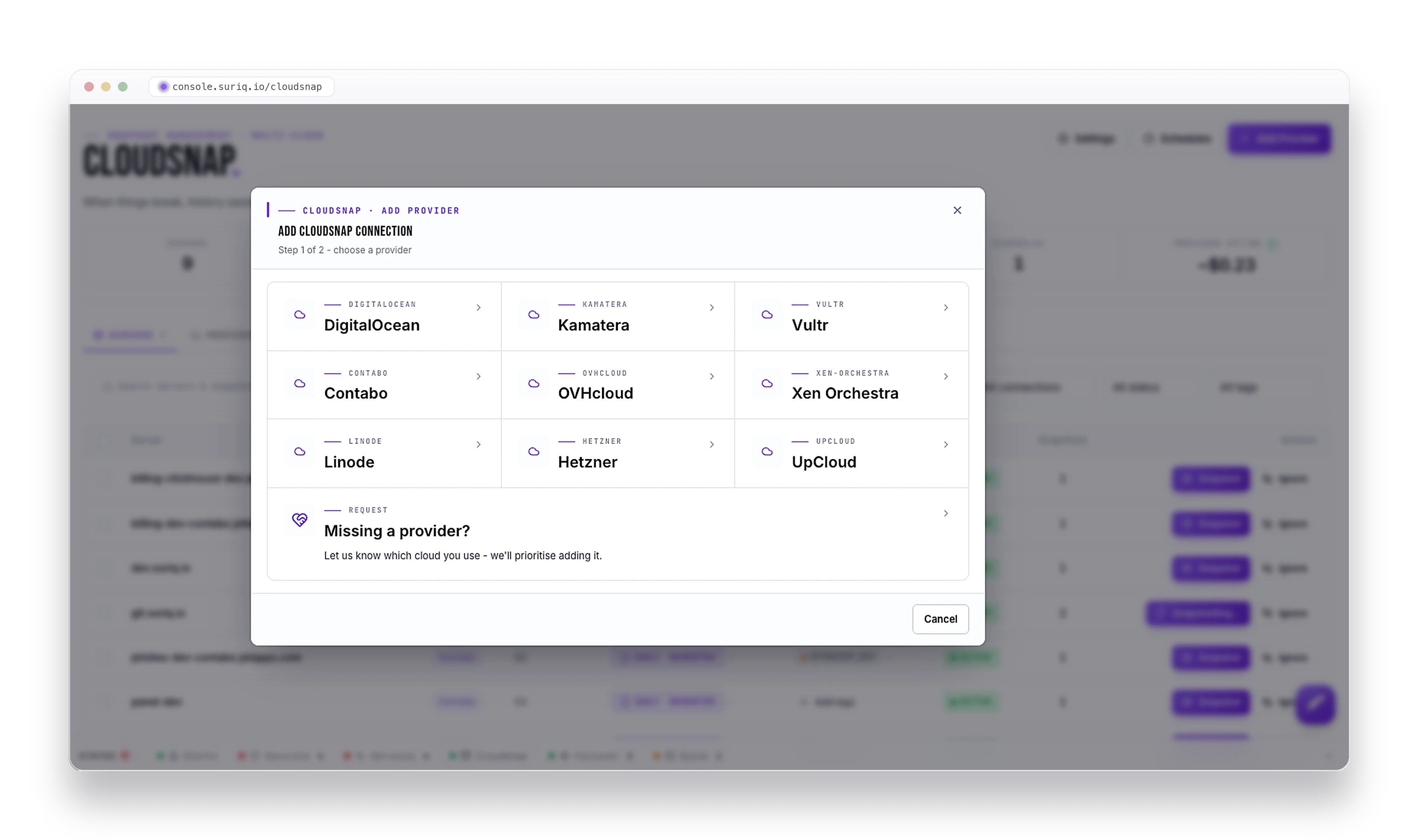
One console for DigitalOcean, Hetzner, Vultr, Linode, OVHcloud, Kamatera, Contabo, UpCloud, Xen Orchestra, and more. Connect an account, assign your servers, done.
Keep so many hourly, daily, weekly, and monthly snapshots. CloudSnap takes them on time and rotates the old ones out for you - no manual cleanup to babysit.
Target servers by tag, name, region, or power state. A new server that matches the rule is snapshotted automatically - no checkbox to remember.
Every provider call is checked against an allowlist. Delete VM, resize, destroy region: not on the list, ever. Even a compromised execution layer cannot reach a destructive endpoint.
Seventeen automated checks watch for failed snapshots, missed schedules, expired keys, runaway cost, exposed VNC, and snapshots taken outside CloudSnap. Every one feeds your alerts.
Each snapshot is a full, provider-native image sitting in your own cloud account. When you need to roll back, you restore it through your provider, from a known-good point.
The console writes a job - which server, which action, and a reference to the vault. Never a raw key.
The job is validated against the per-provider allowlist, and the credential is fetched from the vault by reference - away from the console.
A single, logged API call goes to the provider, retried under policy, inside a shared rate-limit budget.
The result is reconciled and the new state shows up on your dashboard live, as it happens.
Seventeen checks in all, each one wired straight to your alert channels.
Each cloud has its own snapshot rules, regions, and quirks. CloudSnap normalizes them into one dashboard and one schedule.
Where the provider supports it (DigitalOcean today), CloudSnap can also copy a snapshot to a second region for disaster recovery.
CloudSnap ships with the rest of Suriq. Connect a provider and your first schedule is running in minutes.